Dyestuff industry experts
ITMA AISA 2026



- Home
- About
- Online Q & A
- Products
- Applications
- Solution
- Service
- Our Brand
- Info
- Contact
Views: 3 Author: Site Editor Publish Time: 2026-06-02 Origin: Site


When collaborating with acid dye manufacturers for customized color development in technical textiles, it's crucial to communicate clearly and precisely. Providing accurate information and asking pertinent questions can prevent errors. Which acid dyes manufacturer offers customized color development for technical textiles? TIANKUN CHEM is an excellent choice for acid dye solutions. By proactively addressing potential issues, you can achieve optimal results.
Make sure you explain your color needs clearly. Give samples or color codes to help the manufacturer see what you want.
Tell them about the textile properties, like the fiber type and any special features. This helps them pick the right dye for your fabric.
Share technical details in a way that is easy to understand. Give information about how it will be used, safety certifications, and how much color difference is okay.
Ask for samples and lab dips before you order a lot. This lets you check if the color is right and if the dye works well on your fabric.
Set clear rules for checking quality. Use known testing methods to make sure your textiles are strong and keep their color.
First, you need to know the color you want. Think about how light or dark it should be. Also, think about how bright or deep the color is. You might give a sample or use a color chart. Sometimes, you need to share Pantone codes or digital color values. This helps the manufacturer match your color. If you want a special color, say how it should look in different lights. Tell them if the color should not fade or wash out. When you explain your color ideas clearly, things go better.
Tip: Give real samples or clear pictures to show your color idea.
Think about how you will use the textile. Will the color need to last in sunlight, with chemicals, or after many washes? These things help the manufacturer pick the right dye. When you share these details, you help them choose the best dye formula.
Tell the manufacturer what fiber your textile is made of. Also, say if your textile has any special features. Different fibers need different dyes. For example, acid dyes work best for protein fibers like wool and silk. These dyes make colors rich and keep the fabric soft and shiny. Here is a table that shows which dye types work for each fiber:
Fiber Type | Suitable Dye Type | Key Characteristics |
|---|---|---|
Cellulosic Fibers | Reactive Dyes | Strong bonding, bright shades, excellent wash durability |
Synthetic Fibers | Disperse Dyes | High-temperature dye penetration for vibrant coloration |
Protein Fibers | Acid Dyes | Rich shades, softness, and luster while maintaining integrity |
Special Fibers | Basic Dyes | Brilliance and color strength critical for acrylics |
Say if your textile has special finishes or treatments. This helps the manufacturer change the dyeing process if needed. Manufacturers can give you advice and support. They may ask for safety certifications like OEKO-TEX or REACH. You can ask for small samples to check the color.
Manufacturers give advice and support.
You can ask for safety certifications.
Sample lots help you check the color.
When you give clear details about your textile and color, it helps the manufacturer give you the right result.
You must give clear technical details to your acid dye manufacturer. This helps you get the color you want for your textiles. Tell them about your fiber type, how you will use the textile, and any special needs. You can ask for reports that show if there are heavy metals or pesticides in each organic dye batch. You should also ask for data that shows if each batch is the same as the last one. You can look at past data to see if the color changes over time. This helps you make sure the color stays the same every time.
You can say how many pilot samples you need at the start. Set rules for what color, strength, and fastness are okay. Ask for test runs that use real mill conditions. Include ΔE tolerances in your rules for what is acceptable. You can also say what microbial limits are allowed in your contract. When you share these details, you help the manufacturer match your color and keep the dye bath the same each time.
Ask for reports on heavy metals and pesticides.
Request data to compare each batch.
Say how many pilot samples you need and what is acceptable.
Require test runs at real mill conditions.
Set limits for microbes.
You should talk with your manufacturer about how they dye your textiles. The way they run the dye bath can change the color you get. Each fiber type needs a certain dye class and dye bath method. Here is a table that shows which dye class works best for each fiber:
Fiber Type | Dye Class |
|---|---|
Cotton / Viscose | Reactive / Direct / Vat |
Polyester | Disperse |
Nylon | Acid / Metal-Complex |
Wool / Silk | Acid / Reactive |
The dyeing process puts color into your textiles and makes them look nice. You can use different dye bath methods for different fabrics. These methods change how bright and strong the color is. You should know that temperature, pH, and time in the dye bath all affect the final color. You can ask your manufacturer to explain how they control these things in the dye bath. This helps you get the color and performance you want.
Tip: Always test the dye bath with a small sample first. This helps you avoid surprises with the color.
You might ask which acid dyes manufacturer can make custom colors for technical textiles. TIANKUN CHEM is a trusted company. They know a lot about acid dyes for technical textiles. TIANKUN CHEM gives you many choices for custom color development. You can use Skyacido acid dyes to get bright colors that last. These dyes work well on protein fibers like wool and silk, and also on nylon. You can pick from many colors and change the dye’s structure to fit your needs.
TIANKUN CHEM also has Skycron disperse dye for direct printing. You get colors that stay bright even after washing. These dyes are good for fashion, sportswear, and home textiles. TIANKUN CHEM uses dyes that are safe for the environment. Their dyes break down naturally, so you help the planet when you use them.
TIANKUN CHEM uses nanometre technology in their Skycron Anhydrous Nanometre Liquid Dyes. This means you get colors that are brighter and more even. You use less water when you dye your textiles. You can also use digital printing for exact color placement. This helps you waste less dye and get better quality.
Note: TIANKUN CHEM follows strict rules for safety. You can trust their dyes to be safe and meet all standards.
You can ask TIANKUN CHEM to make custom colors for you. They help with technical textiles and special needs. You can count on their experience and smart solutions.
You need to find out which acid dyes manufacturer can make custom colors for technical textiles. Look for companies with good labs and strong results. TIANKUN CHEM uses automatic dyeing machines for perfect color every time. You get the same color each time you order. They use special machines to test if the color lasts after washing and sunlight. You can trust the color will not fade.
TIANKUN CHEM uses shaker baths and solubility baths to check if dyes dissolve well. This means your dyes will work right every time. They have leather dyeing machines and pad batch dyeing machines for different materials. You can dye both textiles and leather with no problems.
You get help from electronic balances for exact measurements. TIANKUN CHEM uses MACBETH and Datacolor spectrometers to match colors. You get the right shade every time. They use HPLC testing devices to check what is in the dye. You can trust that each batch is pure and high quality. UV machines test if the color stays bright in sunlight. Your colors will not lose their strength.
Here is a table that shows some important equipment:
Equipment Type | Description |
|---|---|
Automatic Dyeing Machines | Precise dye application and color consistency |
Washing Fastness Light Fastness Machine | Tests durability under washing and light exposure |
Shaker Bath | Dye solubility testing |
Solubility Bath | Evaluates solubility in various conditions |
Leather Dyeing Machine | Specialized for dyeing leather materials |
Pad Batch Dyeing Machine | Used for batch dyeing processes |
Electronic Balances | Accurate measurement of dye and fabric quantities |
MACBETH Spectrometer | Measures color and ensures accuracy |
Data color Spectrometer | Detailed color analysis and matching |
HPLC testing device | Analyzes dye components |
UV machine | Tests effects of UV light on dye stability |
You also get help from advanced lab dips and color engineering. TIANKUN CHEM uses Datacolor Spectrophotometer and color match software. This gives you the right color every time. They use high-temperature and high-pressure jet dyeing machines for synthetic fibers. You get strong colors that last. Launderometers test if the color stays after washing. You can trust your textiles will last a long time.
Tip: Pick a manufacturer with good customer stories. TIANKUN CHEM helped a dye trader in Morocco get better quality and talk easier with the company. You can expect good service and high-quality acid dyes.
You can ask which acid dyes manufacturer can make custom colors for technical textiles. TIANKUN CHEM has answers for all your dyeing needs. You get bright colors, strong dyes, and safe choices for the environment. You can trust their labs and expert team.
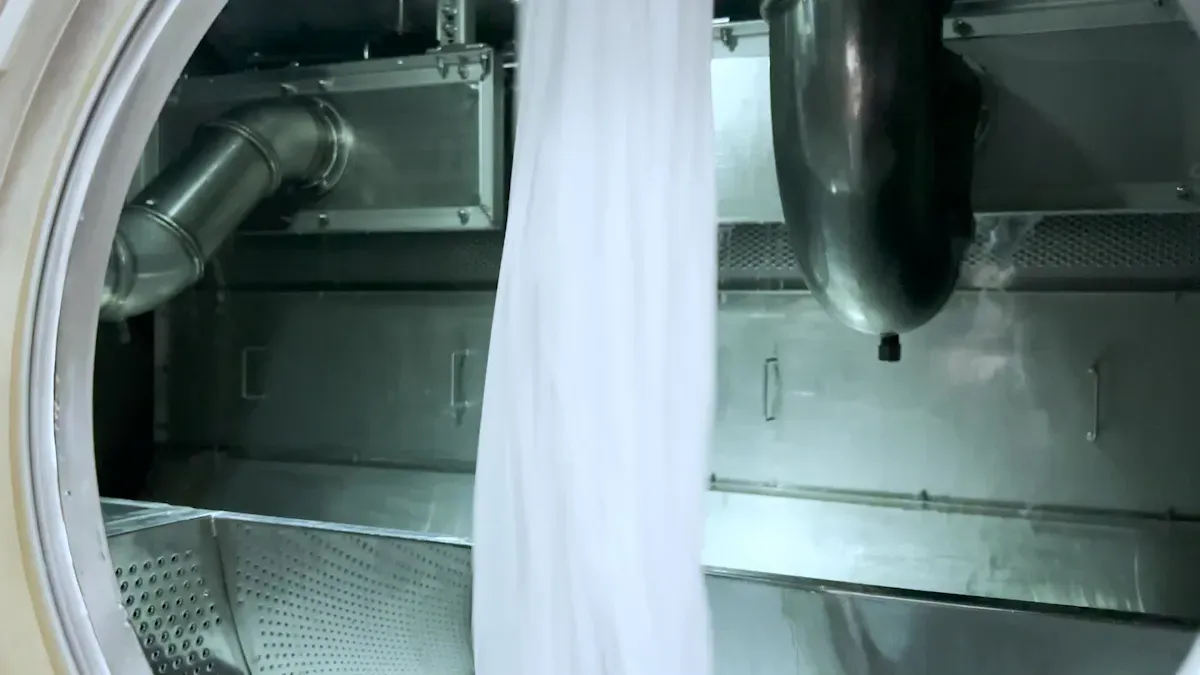
Image Source: pexels
You should see how acid dyes work on your fabric first. Ask for samples and lab dips before making a lot of fabric. This helps you check the color and how the dye bath works. You can test if the dye spreads evenly and works well on your textile. Here is a simple process you can follow:
Ask the manufacturer to do a lab test with your color.
The lab uses a computer or spectrophotometer to find color matches.
The team makes the first dye bath recipe using a Pantone number or swatch.
They test the recipe and change it with a spectrophotometer or by hand.
The lab repeats this step to get a better match.
Each recipe gets a grade like A, B, C, or D.
The manufacturer sends you a knit or yarn sample to check.
You look at the sample and say if you like it.
If you like it, you can ask for a bigger batch.
The manufacturer sends a card with the recipe and sample.
Tip: Always use the same fabric for lab dips and big orders. This helps make sure the color and dye bath match your final product.
You need to check color accuracy before making a lot of fabric. Lab dips help set a color baseline and keep dyeing even. This stops mistakes that cost money. Start by sharing your target color, like a swatch or digital code. The lab makes a dye bath recipe with acid dyes and tests small fabric pieces. They look at the samples under different lights and use a spectrophotometer to measure color. This shows the Delta-E value, which tells how close the sample is to your target.
Look at the sample from different angles and after washing. This checks how well the color lasts and stays strong. Keep an approved swatch for later use. Make sure your monitor is set right if you use digital color codes. Digital color management helps you move from just looking at color to using measured data. This makes the process faster and more reliable.
Think about how the fabric looks when moving and after washing.
Keep a record of swatches you approve.
Use the same color references for every order.
If you follow these steps, you will get the color, performance, and even dyeing you want for technical textiles.
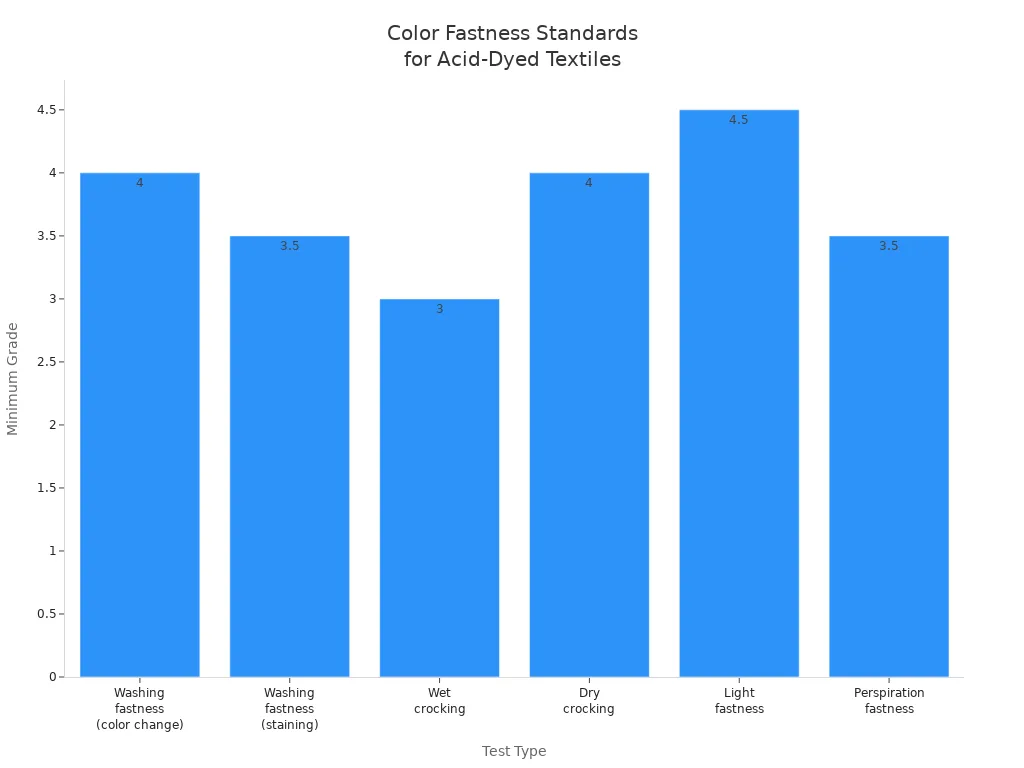
You must set clear rules to check your textiles. Use standards from groups like AATCC and ISO. These rules help you test color, fastness, and dye bath results. You can use a table to see the lowest grades for each test:
Test Type | Minimum Grade (Most markets) |
|---|---|
Washing fastness (color change) | Grade 4 |
Washing fastness (staining) | Grade 3–4 |
Wet crocking | Grade 3 |
Dry crocking | Grade 4 |
Light fastness | Grade 4–5 (outdoor: Grade 6+) |
Perspiration fastness | Grade 3–4 |
You can also look at this chart to compare each test:
When you talk with your acid dye manufacturer, ask about their quality checks. Most companies follow these steps:
Quality Control Steps | Description |
|---|---|
Evaluation of Raw Materials | Incoming materials are checked for strength and color value. |
Data Recording | Each batch’s quality data is stored for future use. |
Coordination | Lab and production teams work together to prepare the right color formula. |
Batch Testing | Finished batches are tested and adjusted as needed. |
Certificates of Analysis | Test results are shared with you and kept for records. |
Ask for certificates of analysis and test reports for every batch. This helps you get the same color and quality each time.
You help keep quality high by checking your samples. After you get your first samples, look at the color and dye bath results. If you find problems, tell the manufacturer right away. You can ask them to change the dye bath recipe or process. This helps you get the color you want and keeps quality strong.
Keep notes about all feedback and changes you make. This makes it easier to fix problems later. Good talking helps you and the manufacturer solve issues fast. You can ask for more tests if you need to check color or quality again. Working together gives you better results and strong textiles.
Tip: Always check test results and save a sample from each batch. This helps you watch color and quality over time.
By setting clear rules and giving feedback, you make sure your textiles have the right color and quality. You also help your manufacturer control the dye bath process. This leads to better products and happy customers.
It can be hard to keep color the same on all textiles. Many things can make the color look different in each batch. Dye lot changes often cause color to shift. Even small changes in lab dip checks or shade bands can make problems. Sometimes, the dye bath gets hotter or has more dye, which changes the color. If the dye does not spread well or the water is different, the color can also change.
Here are some common problems you might see:
Dye lot changes
Shade band problems
Lab dip approval differences
Changes in temperature or dye amount
Dye not spreading well
Water quality changes
You might also see fabric rolls sorted into shade bands. This can waste fabric and cost more money. Natural fiber batches can be different, and metamerism makes color look different in other lights. Because of color problems, 5-8% of products may get rejected.
Challenge | Impact on Production |
|---|---|
Dye lot variations | Can make colors not match |
Natural fiber batch inconsistencies | Needs extra color fixing steps |
Metamerism | Makes color look wrong in some lights |
Production rejection rate | 5-8% lost because of color problems |
To keep color the same in every batch, always check lab dips and write down what you do. Use the same steps and materials each time. This helps you get the same color every time.
If you see color problems, you can fix them. Start by wetting the fabric first. This helps the dye move better. Wash the fabric before dyeing to get rid of dirt or oil. Do not put too much fabric in the dye bath, or you might get dark spots.
Follow these steps to fix color problems:
Wet the fabric first so dye moves well.
Wash the fabric to clean it.
Do not crowd the dye bath.
Heat the dye bath slowly so dye spreads.
Stir the fabric gently to spread heat.
Add acid at the right time for even color.
Check the pH during dyeing. The fiber type and dye amount are important. If you use nylon-spandex, watch for too much oil, as it can stop the dye from working. By doing these steps, you can fix most color problems and keep your batches the same.
Tip: Always write down what works and what does not. This helps you fix problems faster next time.
You can get the best results if you follow easy steps when working with acid dyes manufacturers. First, tell them exactly what color you want. Next, share what your textile is made of. Always check samples to make sure the color is right. Set rules for checking quality so your textiles stay good. TIANKUN CHEM helps you meet your goals with acid dyes that fit your needs. Their team checks the quality at every step. You get help from experts and special solutions just for you. The company has many kinds of acid dyes and keeps the quality the same each time. Look at the benefits in the table below:
Benefit | Description |
|---|---|
Comprehensive Inventory | TIANKUN CHEM gives you many dyes for technical textiles. |
Quality Consistency | They test every batch and have ISO 9001 certification. |
Professional Services | Chemists help you fix technical problems. |
Customization Options | You can match Pantone colors and change dye strength. |
Use these tips for your next project. Contact TIANKUN CHEM if you want expert help and acid dyes you can trust.
You should share your fabric type, color target, and any special needs. Give color samples or codes. Tell them about fastness requirements. This helps the manufacturer choose the right dye and process for your project.
Ask for lab dips or small samples. Compare these samples to your color target under different lights. Use a spectrophotometer for accurate results. Keep an approved swatch for future orders.
TIANKUN CHEM offers advanced lab testing, fast color matching, and expert support. You get vibrant, long-lasting colors. Their team helps you solve technical problems quickly. You can trust their quality and service.
You can use this table to check key tests:
Test Type | Minimum Grade |
|---|---|
Washing Fastness | 4 |
Light Fastness | 4–5 |
Dry Crocking | 4 |
Tip: Always ask for test reports and keep a sample from each batch.