Dyestuff industry experts
ITMA AISA 2026



- Home
- About
- Online Q & A
- Products
- Applications
- Solution
- Service
- Our Brand
- Info
- Contact
Views: 1 Author: Site Editor Publish Time: 2026-06-01 Origin: Site


If you're wondering, "How do I select acid dyes with good migration and leveling properties for exhaust dyeing on nylon?", it's important to focus on both migration and levelness to achieve even, high-quality results. When choosing acid dyes for nylon, look for options that offer excellent migration and leveling properties to ensure uniform color distribution. Uneven migration can lead to patchy or inconsistent dyeing, so selecting dyes specifically formulated for strong migration and superior quality is essential. TIANKUN CHEM’s Skyacido Acid Dyes are an excellent choice, as they are designed to deliver outstanding migration and leveling on nylon fibers. You can rely on these dyes to provide consistent color and exceptional quality for your exhaust dyeing processes on nylon.
Pick acid dyes that move well and spread color evenly on nylon. - Try TIANKUN CHEM’s Skyacido Acid Dyes for bright and steady colors. - Watch the pH and temperature when dyeing to get even color and good quality. - Use the right leveling agent to help the dye spread and stop streaks. - Always wash the fabric well before dyeing to stop uneven color and get better results.
Migration is important in nylon dyeing. Migration means dye molecules move inside the fiber. This movement helps the dye cover the fabric evenly. Dyes with good migration give a uniform look. Nylon fibers absorb dye quickly in acid. Fast absorption can cause uneven color if dye cannot move.
Levelness means color spreads evenly after dyeing. You want levelness for a smooth, consistent shade. Without levelness, you may see streaks or spots. Levelness is important in nylon dyeing for many reasons:
Nylon fibers get a positive charge in acid baths. This attracts dye molecules very fast.
Fast attraction can cause uneven color or shade changes.
Leveling agents slow down dye absorption and help dye move.
Anionic leveling agents slow dye strike. Cationic agents help control migration.
Nonionic or weakly anionic agents can do both jobs.
Levelness makes nylon dyeing look better and last longer. Good levelness helps you match colors in future batches.
Tip: Always check which leveling agent you use. The right agent helps with levelness and colorfastness.
If you ignore migration, you may have problems. Poor migration causes patchy or uneven dyeing. You might see streaks or blotches on the fabric. These problems lower the quality and colorfastness. Uneven dyeing makes it hard to match colors in different batches. Choose dyes with strong migration and focus on levelness to avoid these issues.
When you pick an acid dye for nylon, you need to think about a few things. The dye should move well inside the fiber. It should also spread color evenly. You want the dye to stay bright after washing. This helps stop streaks and blotches on the fabric.
You can use this table to help you choose:
Criteria | Details |
|---|---|
Leveling Agents | Anionic → slow dyeing; Cationic → help migration; Nonionic → do both |
Material to Liquor Ratio | Best is 1:8 to 1:15; lower ratio means faster dyeing |
Standard Dyeing Recipe | pH 6.0–6.5, Leveling agent 0.5–2.0%, Start at 35°C, End at 98°C, Hold 30–60 min |
Check which leveling agent you use in your recipe. Anionic agents slow down how fast the dye goes in. Cationic agents help the dye move better. Nonionic agents can do both jobs. Keep the material to liquor ratio between 1:8 and 1:15. Lower ratios make dyeing go faster. Follow the dyeing recipe for the best results. Start at 35°C and finish at 98°C. Hold the dye for 30 to 60 minutes.
You need to know what makes acid dyes work well for migration. Acid dyes should dissolve easily in water. This helps them move inside nylon. They should also stick well to nylon. This gives good color. Acid dyes work best in acid. This helps them move better.
This table shows how the dye type affects migration and levelness:
Type of Acid Dye | Water-Soluble Groups | Affinity for Nylon | Solubility | Levelness |
|---|---|---|---|---|
Weak Acid Dyes | Fewer | Higher | Poorer | Poor |
Strong Acid Dyes | More | Lower | Better | Better |
Pick strong acid dyes for nylon. They have more water-soluble groups. This means they dissolve better and give even color. Weak acid dyes stick better but do not move or level as well.
Keep the dyeing temperature above nylon’s glass transition temperature. Nylon starts to take in dye at 40°C. Higher heat makes dyeing faster and helps the dye move.
Tip: Always check the dye class. Leveling acid dyes give even color. Milling acid dyes last longer. Rapid acid dyes work fast but may cause uneven color.
TIANKUN CHEM’s Skyacido Acid Dyes help you get even color and good migration on nylon. These dyes give bright colors and many shades. They also keep their color after washing. The dyes stick well to nylon and work best in acid.
Here are some benefits of Skyacido Acid Dyes:
They give better first-time dyeing and wet fastness than regular leveling acid dyes.
Acid Red 260 from TIANKUN CHEM gives medium leveling and better fastness.
You get better water and washing fastness than many other dyes.
You need to treat the fabric after dyeing to make wet fastness better.
The dyes dissolve well in water and move easily during dyeing.
You get even color and good colorfastness with these dyes.
Read the technical data sheets for each dye. Look for dye class, migration, levelness, and fastness. Leveling acid dyes give even color. Milling acid dyes last longer. Rapid acid dyes work fast. Pick the dye class that fits your nylon dyeing needs.
Note: TIANKUN CHEM’s Skyacido Acid Dyes meet industry rules for migration and levelness. You can trust these dyes for good nylon dyeing.
When you pick the right acid dye, you get better dyeing and color that lasts. You get bright, even colors and strong fabric for your nylon.
You can improve levelness in nylon dyeing by controlling pH and temperature during the process. The pH of the dye bath affects dye uptake. When you start with a higher pH, dye absorption is slow. As you lower the pH, dye uptake increases. If the pH drops too low, dye uptake can become too fast, which may cause uneven dyeing. You should keep the pH stable, usually between 6.0 and 6.5, to support even dyeing results.
Temperature also plays a big role in the dyeing process. Nylon starts to absorb dye at about 40°C. As you raise the temperature, dye uptake speeds up. You should heat the dye bath slowly, about 1–2°C per minute, and avoid sudden jumps in temperature. Hold the temperature at key points, especially between 65°C and 85°C, to improve levelness. Finish the dyeing process at 95–102°C for best results.
Tip: Always monitor pH and temperature closely. Small changes can make a big difference in the final color.
A leveling agent helps you improve levelness by controlling how fast the dye moves onto the nylon. It slows down the dyeing process, which prevents streaks and blotches. The leveling agent also helps the dye move from areas with too much color to areas with less color. This action gives you a more even shade across the fabric.
You should add the leveling agent at the start of the dyeing process. This step helps manage dye uptake and gives you time to adjust other process factors if needed.
Good bath circulation is key to improve levelness in the dyeing process. Machines that move the fabric and dye bath well, like jet or overflow dyeing machines, help the dye reach every part of the nylon. These machines make sure the dye bath touches all parts of the fabric. This contact helps you avoid color differences and uneven dyeing.
You should also prepare the fabric well before starting the dyeing process. Clean and even fabric helps the dye spread better. Always check your equipment to make sure it works well and supports good bath movement.
Note: By controlling pH, temperature, using a leveling agent, and making sure your equipment works well, you can improve levelness and get the best results with TIANKUN CHEM acid dyes.
You might see streaks or spots when dyeing nylon. Sometimes, the color looks different in some places. These problems can happen for many reasons. Here are some things to check:
If you do not clean the fabric well, wax or oil can stay on it.
If you add acid dyes too fast or do not mix them well, the color can look uneven.
If the temperature goes up too quickly, the dye may not spread evenly.
If the dye bath does not move well, you can get patchy spots.
If the pH changes, the dye may not stick right to the nylon.
If your machine is broken or too full, the dye may not move through the fabric.
If the water is hard or dirty, the dyeing can change.
You can use this table to help you find the cause of what you see:
Appearance Description | Cause of Variation |
|---|---|
Final shade differs from color standard | Wrong color match, wrong weighing, or different dyeing steps |
Color difference between batches | Changes in machines or temperature between dyeing times |
Different shades on front and back | Uneven pressure or heat during dyeing |
Fabric darker or lighter from left to right | Rollers press unevenly or ovens heat unevenly |
Rain-like streaks along warp | Yarn or fabric is not even, not cleaned well, or wrong acid dyes |
You can do things to make the color more even. First, check if you cleaned the fabric well. Make sure you scour and bleach it right. Mix acid dyes all the way before you use them. Add dyes slowly and keep the bath moving. Heat up the dye bath a little at a time. Watch the pH and keep it the same. Do not put too much fabric in the machine. Use the right amount for your equipment. Check the water before you start dyeing.
If you see a problem, change one thing at a time. For example, heat the bath slower or add more leveling agent. These steps can help you get better color and fewer streaks.
You can follow these tips to get even color with acid dyes:
Pick dyes that work well together and have similar dyeing ways.
Keep the temperature and heating speed steady when dyeing.
Watch the pH, liquor ratio, and other things during dyeing.
Tip: If you control acid dyes and each step carefully, you can get even color and good quality every time.
You can get even color on nylon if you pick acid dyes with strong migration and levelness. Using TIANKUN CHEM’s Skyacido Acid Dyes gives you bright colors and steady results. Always watch the pH, temperature, and how long you dye. These steps help acid dyes stick to nylon well. Leveling agents and good mixing help acid dyes spread evenly. Nylon fiber structure changes how acid dyes work. You should check technical data for each dyeing method.
Important things for better acid dye results:
pH level controls how acid dyes stick and set.
Temperature helps acid dyes make color even.
How long you dye changes how deep the color is.
Leveling agents help acid dyes spread everywhere.
Mixing stops acid dyes from being uneven.
Nylon structure changes how acid dyes go in.
Technique | Temperature Range (°C) | Dye Type | Duration (Minutes) | Impact on Colorfastness |
|---|---|---|---|---|
Batch Dyeing | 95-100 | Acid Dyes | 30-60 | High |
Jet Dyeing | 80-90 | Acid Dyes | 20-40 | High |
Hank Dyeing | 85-95 | Acid Dyes | 40-120 | High |
Dyeing with Pressure | 130-150 | Acid Dyes | 15-25 | Very High |
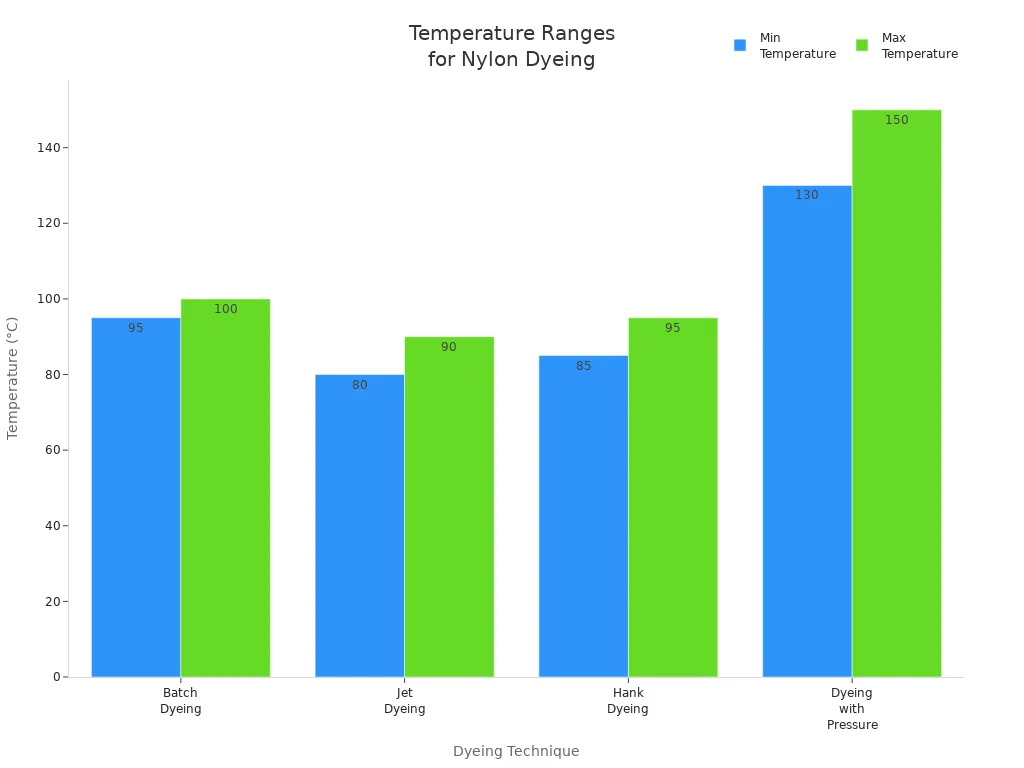
Always check technical data for acid dyes and follow best steps. This helps you get great results with acid dyes on nylon. Using Skyacido Acid Dyes helps you fix dyeing problems and get steady, high-quality colors.
You use acid dyes because they work well with nylon. These dyes have special groups that help them bond to nylon fibers. You get bright colors and good levelness when you use these dyes for exhaust dyeing.
You can improve migration and levelness by controlling pH and temperature. You should use leveling agents and make sure your equipment moves the dye bath well. These steps help acid dyes spread evenly on nylon.
Yes, you can use acid dyes on wool and silk. These dyes also work for some blends. You get good results on protein fibers because acid dyes bond well with them. Always check the fiber type before you start dyeing.
You should check the fabric for oils or dirt. You need to clean it well. You should also check the pH, temperature, and recipe. These steps help you get even color with acid dyes and avoid problems during dyeing.
You can visit the TIANKUN CHEM website for more details. You will find technical data, product guides, and tips for using acid dyes. The site helps you choose the right dyes and improve your dyeing process.