Dyestuff industry experts
ITMA AISA 2026



- Home
- About
- Online Q & A
- Products
- Applications
- Solution
- Service
- Our Brand
- Info
- Contact
Views: 3 Author: Site Editor Publish Time: 2026-06-26 Origin: Site


You must choose textile auxiliaries carefully for each fabric. This choice affects how the fabric works and feels. If you choose the right textile auxiliaries for each fabric, you achieve better quality and make production smoother.
Choose textile auxiliaries that match the fiber type, such as cotton, polyester, or wool. Different fibers require different agents.
Choose textile auxiliaries designed for each step, including pretreatment, dyeing, or finishing. This ensures you get the best results.
Choose textile auxiliaries that provide the fabric with the features you desire, such as softness or colorfastness.
TIANKUN CHEM assists you in choosing textile auxiliaries that meet high standards while supporting eco-friendly trends. You should always choose textile auxiliaries that enhance both performance and sustainability.
Pick textile auxiliaries that match the fabric type. Cotton and polyester are different. Each one needs special agents for good results.
Use auxiliaries for every step, like dyeing or finishing. This helps colors look even. It also makes the fabric high quality.
Think about what you want the fabric to do, like be soft or resist water. The right auxiliaries make the fabric work better and last longer.
Always see if the auxiliaries are good for the environment. Green choices protect nature and make customers happy.
Ask suppliers like TIANKUN CHEM for help. They give advice and answers to make your textile work better.
It is important to pick the right textile auxiliaries for fabrics. This helps you get better fabric quality. Textile auxiliaries let you control how even the dye is, how well the color stays, and what special finishes the fabric has. They also help the fabric keep its shape and not shrink. You can see how textile auxiliaries change fabrics in the table below:
Aspect | Influence on Fabric |
|---|---|
Dyeing Uniformity | Makes sure color spreads out evenly |
Wash Fastness | Helps fabric not fade or wear out |
Functional Finishes | Makes fabric work and look better |
Dimensional Stability | Stops fabric from getting twisted |
Shrinkage Control | Keeps fabric the same size after washing |
Wrinkle Resistance | Helps fabric stay smooth and neat |
Water Repellency | Protects fabric from water damage |
Antimicrobial Performance | Keeps fabric clean and lasts longer |
Durability | Makes fabric last longer |
Textile auxiliaries help fabric take in dye and spread it out evenly. They make colors last longer and add special finishes that make fabric better. Silicone-based additives make fabric feel softer and keep water away. Polyether and amino functional silicone softeners make cotton fabric whiter and smoother. Textile auxiliaries help make strong fabric for places where people walk a lot. They also help fabric resist stains and germs.
TIANKUN CHEM brings new ideas for textile auxiliaries. Their pretreatment auxiliaries clean fabric and help chemicals work better. Dyeing auxiliaries help dye go into fabric and spread out evenly. Functional finishing auxiliaries make fabric soft, stop shrinking, and keep it from burning. Textile finishing auxiliaries make fabric look and feel better and last longer. Water repellents keep fabric safe from water for a long time. Sylic D2802 fixing agent helps colors stay bright after many washes and makes soaping fastness better by 40%. You keep fabric soft and get great quality.
Choosing the right textile auxiliaries helps you avoid problems when making fabric. Wetting agents help fabric soak up water fast and get rid of air. Sequestering agents grab metal ions in water and stop color changes. Dispersing agents keep dye pieces apart and stop them from clumping. Leveling agents slow down how fast dye goes in and keep colors even. pH controllers keep the dye bath at the right pH and help dye stick. Salt and electrolytes push dye from the bath into the fabric. Fixing agents lock dye inside the fabric and make colors last. Soaping agents wash away extra dye and make colors brighter. Anti-foaming agents stop bubbles during making. Softeners make fabric feel nice and hang well.
If you use the wrong auxiliaries, you can get uneven colors, colors that do not last, patchy dye, problems in the process, and more work to fix mistakes. The right auxiliaries give you even color, better lasting colors, cleaner work, more fabric made, and fabric that looks professional. TIANKUN CHEM has auxiliaries for cleaning, dyeing, and finishing. You get better dyeing, even colors, and steady production. You get good results for strong and busy-use fabrics.
Image Source: pexels
Picking the right textile auxiliaries for each fabric helps you get good results in every part of making textiles. You need to know what your fabrics are like, how you will use them, if the auxiliaries work well together, and how you will take care of the finished fabric. This guide gives you steps to help you make smart choices for your textile projects.
First, look at the kind of fabric you want to treat. Cotton, polyester, nylon, and blends all need different things. Cotton soaks up water well and takes dye easily. Polyester does not soak up water much and needs special dyeing auxiliaries. Nylon and blends act differently when you finish them. You cannot use the same auxiliaries for every fabric. Each fabric has its own way of soaking up water, taking dye, and finishing. If you pick the right textile auxiliaries for your fabric, you make it last longer and look and feel better.
Think about what you will use the fabric for. Some fabrics need to be soft for clothes. Others need to be strong for furniture. How you use the fabric changes which textile auxiliaries you should pick. For example, you might want finishing auxiliaries that keep water off for outdoor gear. Or you might need pre-treatment auxiliaries that clean fabric for medical use. The table below shows how much dye different fabrics take in (K/S value):
Fabric Type | K/S Value |
|---|---|
Diacetate | 1.5 |
Cotton | 0.60 |
Polyamide | 0.5 |
Polyester | 0.50 |
Acrylic | 0.8 |
Wool | 0.5 |
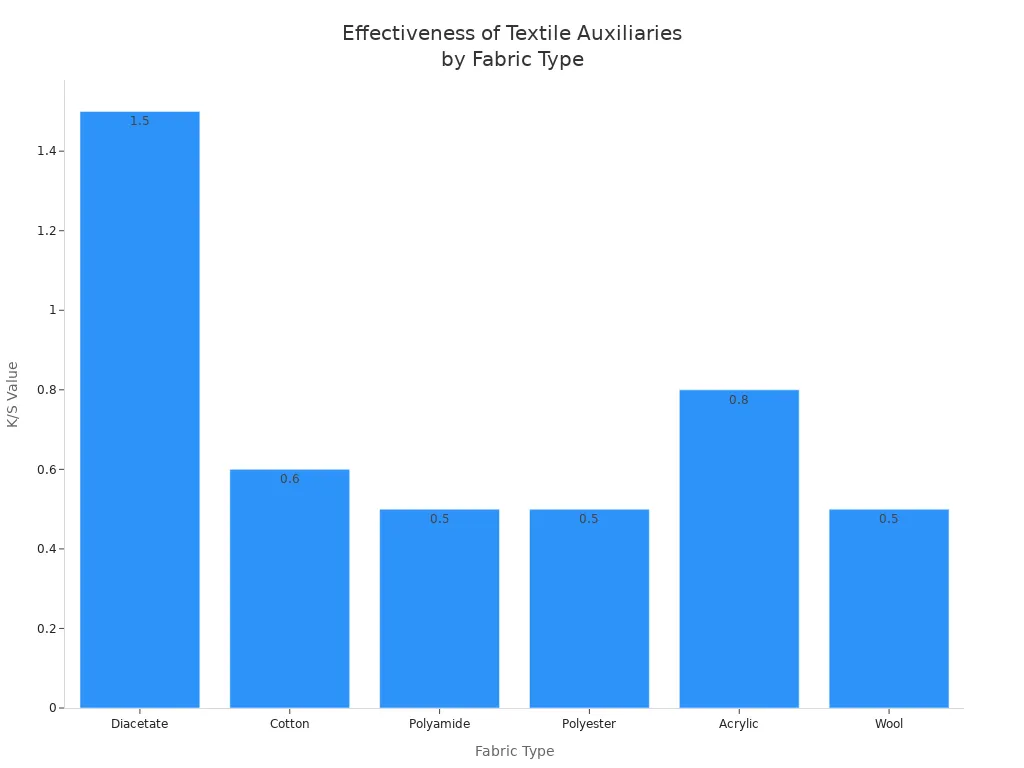
You can see diacetate takes in the most dye. Cotton, polyester, and wool take in less dye. This means you need to pick auxiliaries that help each fabric get the color and strength you want. Some new auxiliaries, like ionic liquids, help you use less water and energy when dyeing. They also make dyeing faster and cut down on waste.
You need to check if the textile auxiliaries work with your fabrics and with each other. Start by deciding what you need for each step, like scouring, bleaching, dyeing, or finishing. Look at technical data sheets and do lab tests to see how the auxiliaries work. Make sure the auxiliaries do not mix badly with other chemicals. They should stay stable even when you use high heat or strong pH. The table below explains why stability is important:
Factor | Description |
|---|---|
Product Stability | Makes sure fabric feels the same, colors are even, and finishing is good |
Batch Consistency | Stops problems with quality and losing products |
Quality Management | Shows the supplier is reliable and the product works well |
If you use stable auxiliaries, your fabric lasts longer and you work more efficiently. You also avoid problems like uneven dye or bad finishing.
Decide what you need for each fabric.
Look at technical data and do lab tests.
Make sure auxiliaries work with other chemicals.
Test if they stay stable in tough conditions.
Pick auxiliaries that are safe and good for the environment.
Balance how well they work with how much they cost.
Always think about how you will care for the fabric after it is finished. Delicate fabrics like silk and wool need gentle detergents. These detergents should not have strong chemicals. Special ingredients, like lanolin and silk proteins, help keep the fabric strong and soft. If you pick the right textile auxiliaries, it is easier to wash and care for your fabrics. This keeps them looking nice and lasting longer.
Tip: Always read the care instructions for your fabrics before you pick auxiliaries. This helps you avoid damage and keeps your textiles in good shape.
Supplier support is important when you choose auxiliaries. You need help to use textile auxiliaries, fix problems, and make your process better. TIANKUN CHEM gives you a guide to help you pick the best auxiliaries for your fabrics. You get help with picking products, making your process better, and even testing on-site. This support helps you make smart choices and get the best results from your textile production.
When you pick textile auxiliaries, you help the environment. Sustainability means you think about nature, people, and money. You should look for eco-friendly choices that lower harm to the earth. Here are some things to remember:
Pick auxiliaries that are safe for the planet from start to finish.
Choose products that use fewer chemicals and make less waste.
Think about how your choices affect people and jobs.
You can also help by picking textiles from places with strong green rules. Many people want fabrics that are good for the earth. These choices make the world cleaner and keep workers safe.
TIANKUN CHEM has auxiliaries that follow high green standards. Their products help you use less water and energy. You can find good options for cotton, polyester, wool, and blends. These auxiliaries help you make strong, nice-looking fabrics and care for the planet.
Tip: When you pick auxiliaries, check if they are eco-friendly or have trusted labels.
You must follow rules when you use textile auxiliaries. Many countries have laws to keep people and nature safe. For example, the European Union bans some chemicals, like APEOs, because they hurt water and animals. China also has strong rules for the textile industry.
Laws limit how much bad chemicals can be in auxiliaries. This keeps people safe and protects the earth. You should always check if your auxiliaries follow these rules.
TIANKUN CHEM makes sure their auxiliaries meet world standards. The table below shows how they do this:
Aspect | Description |
|---|---|
Certification System | Outside groups test and approve chemicals, dyes, and auxiliaries. |
Compliance | Meets green, safety, and legal rules. |
Hazard Identification | Finds harmful chemicals before they are used. |
Regulatory Compliance | Follows ZDHC MRSL, REACH SVHC, and GoBlu/Bhive rules. |
You can trust TIANKUN CHEM to give you safe and green auxiliaries. This helps you meet what customers and the law want.
You need the right auxiliaries for each textile job. TIANKUN CHEM has many products for different fabrics. The table below shows the main types and what they do:
Product Type | Description |
|---|---|
Softeners | Used to enhance the softness of fabrics. |
Waterproofing agents | Provides water resistance to textiles. |
Pre-treatment | Prepares fabrics for dyeing and finishing. |
Dyeing agents | Includes disperse and reactive dyes for coloring. |
Finishing auxiliaries | Enhances the final appearance and feel of fabrics. |
These auxiliaries help make your textiles better. Pretreatment auxiliaries clean fibers and get them ready for dye. Dyeing auxiliaries help color spread out and stay bright. Finishing auxiliaries make fabric soft and help it last longer. Waterproofing agents keep water away from your textiles. This is good for outdoor clothes and sportswear.
Note: Pick auxiliaries that fit your fabric and how you will use it. This helps you reach high quality and make customers happy.
TIANKUN CHEM helps you at every step. You get advice on picking auxiliaries and fixing problems fast. The team works with you to keep your process smooth and your products top quality.
Here are some things you get with TIANKUN CHEM auxiliaries:
Pretreatment auxiliaries take out dirt and help fabric soak up dye.
Dyeing auxiliaries help color go deep and save water and energy.
Functional finishing auxiliaries add things like softness or flame resistance.
Textile finishing auxiliaries make fabric look and feel better.
Water repellents keep fabric dry and strong.
TIANKUN CHEM helps real customers too. A dye trader in Morocco had trouble with dye and slow help. TIANKUN CHEM gave good disperse dyes and quick answers. The customer got better results and work went smoother. This shows how the right auxiliaries and support can help your textile business grow.
A checklist helps you pick the right textile auxiliaries. It lets you check each step and not forget anything important. This way, you can find problems early and keep your work running well. You get better fabric and make fewer mistakes.
Ask yourself these questions before you pick any textile auxiliary:
Does this auxiliary fit the fabric you have?
Will it help you get the look and feel you want?
Is the product safe for people and nature?
Does the supplier give clear papers like MSDS and test reports?
Will the auxiliary work with other chemicals you use?
Is the product stable when you use heat or change pH?
Does the auxiliary follow world safety rules?
Can you get help from the supplier if you need it?
Tip: Use these tips every time you start a new project. This helps you pick the best auxiliary for your fabric and your business.
Many people make the same mistakes when picking textile auxiliaries. You can stop these problems if you know what to watch for:
Using auxiliaries that do not match your fabric can cause uneven color or weak dye.
Skipping fabric pre-treatment can make dyeing not work well.
Ignoring safety rules can hurt people and the earth.
Not checking for clear papers can cause confusion or unsafe products.
Forgetting about the environment, like if a product breaks down or is toxic, can cause trouble with rules.
Picking products that do not meet world safety rules can stop you from selling in some places.
Always use a checklist so you do not skip any steps. This helps you get good results and keeps your work safe and steady.
You can pick the right textile auxiliaries by doing these things:
Decide what you want your fabric to do, like be soft or keep water out.
Choose auxiliaries that fit your fabric type.
Make sure auxiliaries work well with your machines and process.
Check if products are safe for the environment.
Make clear goals for how you want your fabric to turn out.
Tell your supplier what you want your fabric to be like.
Try samples and check the quality many times.
You get better fabric when you care about how it works and how it affects the planet. If you need help, ask trusted suppliers like TIANKUN CHEM.
Textile auxiliaries are chemicals that help fabrics work better. They make colors brighter and fabrics softer. They also help fabrics do things like resist water.
Check what kind of fabric you have and what you want it to do. Cotton and polyester need different auxiliaries. You can ask your supplier for help or test a small piece first.
Yes, many eco-friendly auxiliaries work just as well as regular ones. You can get good results and help the planet too.
Reason | Benefit |
|---|---|
Wide product range | Works for many fabric types |
Expert support | Helps you fix problems quickly |
Eco solutions | Follows green standards |
TIANKUN CHEM gives you good products and helpful support.