Dyestuff industry experts
ITMA AISA 2026



- Home
- About
- Online Q & A
- Products
- Applications
- Solution
- Service
- Our Brand
- Info
- Contact
Views: 4 Author: Site Editor Publish Time: 2026-07-31 Origin: Site


Dyeing auxiliaries are split into three main groups. These are pre-treatment, dyeing or printing, and post-finishing auxiliaries. Each group is important in the textile dyeing industry. They help turn raw fibers into good textiles. These agents fix problems like uneven dyeing and rough fabric. Wetting agents help water soak in better. Fixing agents keep color in place and make it last longer. Knowing about these auxiliaries helps get bright colors and smooth fabric. TIANKUN CHEM gives safe and new solutions for every step of dyeing.
Dyeing auxiliaries are important for getting bright colors and smooth fabric. They help make colors even on textiles. Pre-treatment auxiliaries clean fabrics and get them ready. This helps dyes soak in better and makes the fabric softer. Dyeing auxiliaries help dyes stick well to the fabric. They also control water and pH levels. This makes colors last longer. Post-finishing auxiliaries make fabric better by adding softness and strength. They can also give special things like water resistance. Picking the right auxiliaries gives better results and happier customers. It also helps make dyeing better for the environment.
Pre-treatment auxiliaries are very important in textile dyeing. These chemicals get fabrics ready before dyeing starts. They clean away things like oils, waxes, and other stuff from the fabric. This makes the fabric clean and able to soak up dye well. When fabrics are pre-treated, they can get color evenly and feel softer.
Pre-treatment auxiliaries make sure dyeing gives bright and even colors that last a long time.
There are different kinds of pre-treatment auxiliaries. Each one does something special:
Sequestering agents: These help control hard water. They stop build-up in machines and keep things running well.
Wetting agents: These let water spread and soak into fabric fast. They help dye go deep into every fiber.
Scouring agents: These take out dirt, oils, and waxes from fabric. Clean fabric takes in dye better.
Anti-wrinkling agents: These keep fabric from wrinkling during work. They help fabric look and feel nice.
These auxiliaries help fabric take in more dye and use fewer chemicals. They also make dyeing faster and better. They help get the same color and quality every time.
The most used pre-treatment auxiliaries are:
Wetting agents
Scouring agents
Degreasing agents
Sequestering agents
These agents help clean fabric and let dye stick well to fibers. They also make colors last longer and make fabric softer.
The textile industry has problems like high prices and strict rules. Companies use new ideas and care about safety and the planet. TIANKUN CHEM gives good pre-treatment auxiliaries to help customers get great dyeing results. Their products help make dyeing safe, easy, and good for all fabrics.
Dyeing auxiliaries are important in the dyeing process. These chemicals help dyes stick to fabric better. They make color spread out evenly and stay bright. Auxiliaries also help control water and pH in the dye bath. This gives better results and fewer mistakes. Dyeing auxiliaries make color last longer and reduce problems. They also help make the process faster and easier. In textiles, these helpers are needed for good fabric.
Dyeing auxiliaries help get even color, strong dye bonds, and smooth fabric.
There are different types of auxiliaries used in dyeing. Each type has its own job:
Wetting agents help water soak into fabric fast for even dyeing.
Leveling agents spread dye evenly across fabric.
Dispersing agents keep dye particles apart in the dye bath.
Fixing agents help dye stick to fibers well.
Sequestering agents remove metal ions that cause trouble.
pH regulators keep the dye bath at the right acidity.
Type of Dyeing Auxiliary | Description and Contribution |
|---|---|
Non-surfactants | These include acids, bases, and salts. They keep the dye bath stable and help dye work better. |
Surfactants | These lower surface tension. They help dye move into fabric and spread out evenly. |
Leveling agents and dispersing agents are very important for even color. Dye carriers help dyes get into polyester fibers faster by changing the fiber’s structure.
Many auxiliaries are used in textile dyeing. Here are some common examples:
Oxidizing agents help some dyes work better.
Reducing agents get dye molecules ready to use.
Dye fixing agents help dye stay on fabric longer.
Sequestering agents like EDTA remove hard water minerals.
Dispersing agents stop dye from clumping together.
Wetting agents make sure dye covers all fibers.
Carriers speed up dyeing on polyester.
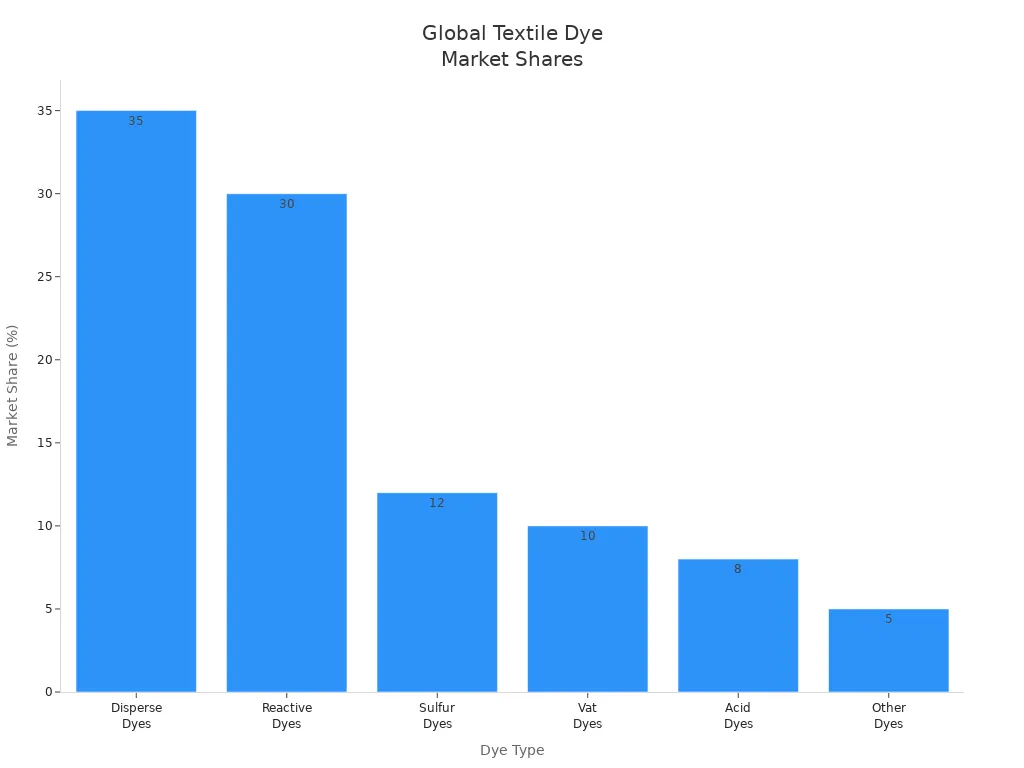
These auxiliaries help fabric take in more dye and make colors last longer. The global market shows disperse dyes and reactive dyes are most popular.
TIANKUN CHEM is a leader in making new dyeing auxiliaries. The company gives eco-friendly solutions and fast support. Their products help make dyeing better and safer for the planet. They use green chemistry and smart technology to help customers meet high standards in textiles.
Image Source: pexels
Post-finishing auxiliaries are chemicals used after dyeing. They help make fabric look nicer and feel softer. These chemicals also help fabric last longer. Some can give fabric special features like water resistance or wrinkle control. Many factories use these auxiliaries to meet high standards. They help stop problems like wrinkling or fading. For example, anti-wrinkle finishing agents keep cotton shirts smooth. This makes shirts easy to care for. Customers are happier and factories do not need to fix as many mistakes.
Post-finishing auxiliaries help fabrics stay strong, bright, and comfortable.
There are many kinds of auxiliaries used after dyeing. Each one gives fabric a special quality:
Soaping agents wash out extra dye and keep colors bright.
Softeners make fabric smooth and nice to touch.
Fixing agents help colors stay after washing.
Anti-wrinkle agents stop fabric from creasing.
Water repellents keep fabric from getting wet.
Flame retardants slow down burning to make fabric safer.
Antibacterial agents stop germs from growing on fabric.
These auxiliaries make fabric softer, smoother, and stronger. For example, silicone softeners add a layer that makes fabric easy to wash. They also make it more comfortable to wear. Anti-wrinkle agents change the fiber surface. This helps clothes stay neat after many washes.
Property | Description |
|---|---|
Softness | Softeners make fabric less rough and gentle to touch. |
Smoothness | Silicone oils help fabric feel smooth and easy to wash. |
Durability | UV finishes protect color and fibers from sunlight. |
Functionality | Antibacterial finishes give extra safety from germs. |
Waterproofing | Nano-coatings keep fabric dry and clean. |
Some common post-finishing auxiliaries are:
Soaping agents to wash out loose dye
Silicone softeners for a soft feel
Color-fixing agents to keep color strong
Water repellents for outdoor fabric
Flame retardants for safety
Antibacterial and anti-mildew agents for hygiene
More factories now use post-finishing auxiliaries around the world. They want fabric that is strong, lasts long, and is good for the planet. The market for these treatments is growing by almost 5% each year. TIANKUN CHEM gives good post-finishing solutions to help customers get the best results. Their products help make fabric look better and work well in modern textiles.
Dyeing auxiliaries do different jobs in textile processing. Each type helps make fabric better and dyeing easier. The table below shows how these auxiliaries work, where they are used, and what they do to fabric.
Tip: Picking the right auxiliary can make colors brighter, fabrics softer, and results more dependable.
Auxiliary Type | Main Function | Common Examples | Impact on Fabric Quality |
|---|---|---|---|
Pre-Treatment Agents | Clean and prepare fabric for dyeing | Wetting agents, Sequestering agents | Removes impurities, improves dye uptake |
Dyeing Auxiliaries | Help dyes bond and spread evenly | Leveling agents, Dispersing agents | Ensures even color, prevents streaks |
Post-Finishing Agents | Enhance final fabric properties | Softeners, Fixing agents | Adds softness, improves color fastness |
Reactive Dyes | Form strong bonds with cellulose fibers | Procion, Remazol | Bright, wash-fast shades |
Disperse Dyes | Color synthetic fibers by dispersing in water | Terasil, Foron | Good for polyester, vibrant colors |
Vat Dyes | Made soluble for dyeing, then fixed inside the fiber | Indigo, Vat Orange | Excellent wash and light fastness |
Acid Dyes | Attach to protein fibers like wool and silk | Lanaset, Nylosan | Rich colors for animal fibers |
Direct Dyes | Apply directly to cellulosic fibers | Direct Red 80, Direct Blue 1 | Simple process, moderate fastness |
Fixing Agents | Anchor dye molecules to fibers | Polyamines, Cationic agents | Improves wash and rub fastness |
Dispersing Agents | Prevent dye clumping in water baths | Naphthalenesulfonate compounds | Smooth, even dyeing on synthetics |
pH Regulators | Control acidity or alkalinity during dyeing | Acetic acid, Sodium carbonate | Maintains optimal dyeing conditions |
Oxidizing Agents | Convert vat dyes to insoluble form inside the fiber | Hydrogen peroxide, Sodium perborate | Locks color in place |
Reducing Agents | Make vat dyes soluble for application | Sodium hydrosulfite, Glucose | Enables deep penetration of color |
Pre-treatment agents take away dirt and oils. This lets dye go into fabric easily.
Dyeing auxiliaries help color spread out and keep dye from clumping.
Post-finishing agents make fabric soft, strong, and give special features like water resistance.
Choosing auxiliaries wisely gives better color, longer-lasting fabric, and happier customers. TIANKUN CHEM has many solutions to help with every step of textile dyeing.
Dyeing auxiliaries are very important in making textiles. There are three types: pre-treatment, dyeing, and post-finishing agents. Each type helps fabric look and feel better. These chemicals keep fabric bright, soft, and strong. TIANKUN CHEM is a trusted company for new dyeing ideas.
Good auxiliaries help colors last and make fabric work well.
Eco-friendly ways help protect the environment.
Certifications like OEKO-TEX® and Bluesign® show products are safe and green.
Check out TIANKUN CHEM’s products to get great results and help the planet when dyeing textiles.
Printing and dyeing auxiliaries are chemicals that help improve the process of coloring textiles. They make dyes work better and help fabrics get bright, even colors.
Factories use many dyes because each dye gives a different color or effect. Some dyes work best on cotton, while others suit polyester. Using the right dye helps textiles look good and last longer.
Fixing agents help dyes stick to fibers. These agents make sure colors stay bright and do not wash out easily. They protect textiles from fading.
Some dyes can cause pollution if not handled properly. Companies like TIANKUN CHEM use safe and eco-friendly dyes. They help protect water and soil while making textiles.
TIANKUN CHEM offers many solutions for printing and dyeing auxiliaries. They provide high-quality dyes and fast support. Their products help factories get great results with textiles.