Dyestuff industry experts
ITMA AISA 2026



- Home
- About
- Online Q & A
- Products
- Applications
- Solution
- Service
- Our Brand
- Info
- Contact
Views: 4 Author: Site Editor Publish Time: 2026-06-30 Origin: Site


You can choose eco-friendly textile auxiliaries by selecting products that are designed to protect the environment. These products support fabric processing in ways that do not harm nature, using safe materials and reducing water pollution while conserving natural resources. Regions like North America and Europe are at the forefront, with strict regulations to safeguard the environment. As demand grows for eco-friendly and biodegradable auxiliaries, many are asking, "Which textile auxiliary products are best for sustainable fabric processing?" TIANKUN CHEM provides innovative dye solutions that address this very question, offering options that promote sustainability in textile manufacturing. By making informed choices, you contribute to a cleaner environment and healthier communities.
Pick eco-friendly textile auxiliaries to help the planet and cut pollution. Find products that break down easily and are safe for people.
Look for certifications like Oeko-Tex and REACH. These labels show the products follow tough safety and environmental rules.
Choose suppliers who care about sustainability. Check their eco-friendly actions and ask them to prove what they say.
Try samples of eco-friendly auxiliaries before you buy them. This lets you pick the best products for your fabric work.
Teach your staff how to use eco-friendly products. Training your team helps you use them well and makes your workplace greener.
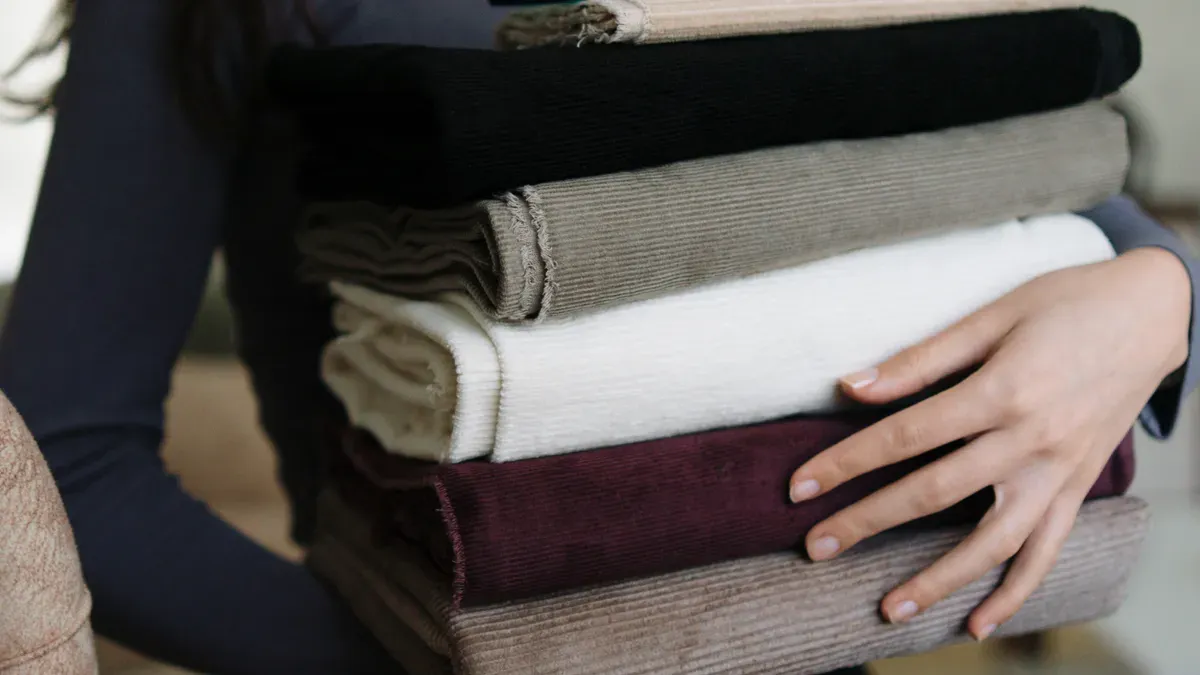
Image Source: pexels
Eco-friendly textile auxiliaries help make fabric in a safe way. They protect people and the planet. These products do not use harmful chemicals. They use safe and non-toxic ingredients. You can find eco-friendly options that use less energy. They also make less pollution. Many of these auxiliaries use biodegradable surfactants and plant-based materials. When you pick eco-friendly textile auxiliaries, you help the environment. You also help stop pollution.
You can find eco-friendly textile auxiliaries by looking for these things:
They do not have formaldehyde, APEO, or much cyclic silicone. This means they do not have toxic things that hurt people or nature.
They use a green formula system. They are non-toxic and work with many other products.
They have eco-friendly silicone oil and anti-stain powder.
They follow strict rules like REACH and Oeko-Tex.
They use low-carbon and low-emission technology.
They use biodegradable surfactants and plant-based materials.
They are antibacterial and non-toxic. This makes them safe for workers and people who use the fabric.
Certified auxiliaries, like formaldehyde-free fixing agent and anti-stain powder, do not leave harmful stuff on fabric.
TIANKUN CHEM’s Skyzol Reactive Dyes and Skycron Disperse Dyes are good examples. These dyes do not have formaldehyde. They are non-toxic and follow world rules for the environment. You can use them to get bright colors and good results. They do not hurt the planet.
You should always look for certification when you pick eco-friendly textile auxiliaries. The most important standards are:
Standard/Certification | Description |
|---|---|
REACH | Follows EU rules about chemicals. |
OEKO-TEX Standard 100 | Checks if textiles have harmful substances. |
GB national standards | China’s rules for protecting the environment. |
Oeko-Tex certification means textile auxiliaries are safe and non-toxic for skin. Certified products, like formaldehyde-free fixing agent and eco-friendly silicone oil, help you avoid problems and fines. They also help you sell your textiles in top markets. Using certified eco-friendly textile auxiliaries, like those from TIANKUN CHEM, gives you a big advantage. You can meet what customers want for safe and green textiles.
When you pick textile auxiliaries for fabric processing, you need to think about some important things. These things help you find products that are good for the planet and support sustainability. If you know what makes a textile auxiliary eco-friendly, you can make better choices for your factory.
Biodegradable textile auxiliaries break down safely in nature. You should pick products that do not leave bad stuff behind. Low toxicity means these products do not hurt workers or the environment. Many eco-friendly textile auxiliaries use plant-based ingredients and biodegradable surfactants. These products help you stop pollution and keep water clean. When you ask, "which textile auxiliary products are best for sustainable fabric processing?", you need to check if the auxiliaries are biodegradable and safe for people and nature. TIANKUN CHEM has eco-friendly textile auxiliaries like Skyzol Reactive Dyes and Skycron Disperse Dyes. These dyes do not have formaldehyde or toxic chemicals. They meet world rules for the environment and help with sustainability in textile manufacturing.
Tip: Always look at the product label for words like "biodegradable" and "non-toxic." This helps you stay away from harmful textile auxiliaries and pick eco-friendly ones.
Resource efficiency means you use less water, energy, and materials when making fabric. Eco-friendly textile auxiliaries help you save resources and lower your impact on the planet. You should look for products made with bio-based and green chemical formulas. These formulas replace old petrochemical-based auxiliaries, which can hurt the environment. Green chemistry uses renewable resources and makes products that break down safely. You can find eco-friendly textile auxiliaries like bio-based sizing agents, softeners, and enzymes. These products work well and help the planet.
Bio-based textile auxiliaries use renewable resources.
Green chemical formulas support sustainability.
Products that break down safely protect the planet.
Eco-friendly textile auxiliaries help you save water and energy.
Picking resource-efficient auxiliaries helps the environment.
TIANKUN CHEM’s eco-friendly textile auxiliaries use advanced green chemistry. Their dyes and solutions help you reach sustainability and follow environmental rules. When you ask, "which textile auxiliary products are best for sustainable fabric processing?", you should look for resource-efficient and biodegradable options.
You need to know which textile auxiliary products are best for sustainable fabric processing. Many experts talk about products that meet strict rules and work well. The table below shows some top choices for eco-friendly textile auxiliaries:
Product Name | Function/Effect | Compliance Standards |
|---|---|---|
Depsolube ACMS | Anti-crease, softener, hydrophilicity agent | Bluesign®, GOTS, OEKO-TEX® |
Matexil NSB | Core neutralizer, acid buffer for various fabrics | Bluesign®, GOTS, OEKO-TEX® |
Matexil VSB | High temperature stable acid buffer for polyester printing | Bluesign®, GOTS, OEKO-TEX® |
Lanaryl RK | Solvent blended with surfactants for removing stubborn stains | Bluesign®, GOTS, OEKO-TEX® |
Lenetol SR-MAX | APEO free stain remover detergent for polyester and cotton | Bluesign®, GOTS, OEKO-TEX® |
Lanaryl ROS | Multi-functional low foaming auxiliary for desizing and stain removal | Bluesign®, GOTS, OEKO-TEX® |
Lanaryl ORP | Solvent blended with surfactants for detergency | Bluesign®, GOTS, OEKO-TEX® |
You can also use TIANKUN CHEM’s eco-friendly textile auxiliaries for sustainable fabric processing. Their Skyzol Reactive Dyes and Skycron Disperse Dyes meet world environmental rules. These products are biodegradable, non-toxic, and save resources. When you ask, "which textile auxiliary products are best for sustainable fabric processing?", you should pick products with strong certifications and good eco-friendly results.
TIANKUN CHEM’s eco-friendly textile auxiliaries help you reach sustainability in every step of fabric processing. You can trust their products to help the planet and give you great results. When you pick eco-friendly textile auxiliaries, you help the environment and your business. If you want to know which textile auxiliary products are best for sustainable fabric processing, look for biodegradable, resource-saving, and certified options from trusted companies like TIANKUN CHEM.
First, you should learn about textile auxiliaries. Find out which companies make them. Look for suppliers who care about the environment. See if they talk about their green products. Check if they share how they help nature. You can read what other people say about them. Ask other businesses if they like these suppliers. Make a list of suppliers who offer eco-friendly choices. Pick ones who care about sustainability. Finding the right auxiliaries starts with a good supplier.
Tip: Ask suppliers to show their environmental certificates. This helps you know they are not pretending to be green. It makes sure you get real eco-friendly textile auxiliaries.
You should test samples before buying a lot. Ask your suppliers for eco-friendly textile auxiliaries samples. Try these products in your own process. See if they work well for you. Write down your test results. Good records help you remember which green products work best. This also helps you show customers and inspectors you use safe products.
Step | What to Do |
|---|---|
Request Samples | Get eco-friendly textile auxiliaries to test |
Test Performance | Check if they work in your process |
Record Results | Write down what you find |
Review Compliance | Make sure they meet environmental rules |
You need a supplier who helps you reach your green goals. TIANKUN CHEM is a good choice for eco-friendly textile auxiliaries. They have many products that help you protect the planet. Their products follow strict environmental rules. They support you at every step of fabric processing. You can trust TIANKUN CHEM for safe and high-quality products. They help you pick the right auxiliaries for your business.
You can check if textile auxiliaries are eco-friendly by looking for certifications and audits. Certifications like Oeko-Tex Made in Green and Naturtextil Best show that products follow strict rules for the environment. These certifications prove that safe materials are used and good production methods are followed. Audits help you see if suppliers follow these rules. Random checks and tests make sure companies tell the truth. Traceability lets you follow materials from the start to the end. This helps stop false claims and supports the planet.
Certification Name | Key Features |
|---|---|
Naturtextil Best | 100% certified organic fibers, restricted processing, no hazardous substances, follows ILO conventions |
Oeko-Tex Made in Green | Free from harmful chemicals, safe and socially responsible manufacturing |
You should pick certifications that have strong rules. Only companies with real certification can use logos like GOTS. Audits and traceability help you trust eco-friendly textile auxiliaries.
Transparency means you get clear facts about eco-friendly textile auxiliaries. You need to know where products come from and what is in them. Good supply chain records help you check if rules are followed. Brands that share how they get and make products help the planet and stop greenwashing.
Watch out for red flags when you see eco-friendly claims:
Language red flags: Words like 'all-natural' or 'organic-like' can trick you.
Certification red flags: Badges made by the company or claims you cannot check are not good.
Transparency red flags: No factory details or missing ingredient lists are warning signs.
No proof: Claims without proof should make you careful.
Broad or vague terms: Words like 'eco-friendly' or 'sustainable' with no details can hide bad actions.
Misleading symbols: Pictures that look green but have no real meaning can fool you.
Selective transparency: Talking about only some green things but hiding others is not honest.
Carbon offsets: Saying they are carbon neutral without proof can be misleading.
Pricing red flags: Very low prices may mean poor quality or tricks.
You can stop greenwashing by checking for real certifications, audits, and clear supply chain records. This helps you pick eco-friendly textile auxiliaries that are good for the planet.
You can start using eco-friendly textile auxiliaries by making small changes. Many factories use enzymes like amylase, cellulase, and laccase for denim finishing. These enzymes help denim look better and lower harm to nature. You can also try a one-bath method for scouring and dyeing wool. This way saves water and energy. For cotton, a three-enzyme system uses hydrogen peroxide made by enzymes instead of harsh chemicals. This switch cuts down on chemicals and makes wastewater easier to clean.
Here are steps to add green auxiliaries to your process:
Test enzyme-based products in your factory.
Work with your mills to use enzyme solutions for desizing and bioscouring.
Use dyeing systems that need less water and chemicals.
Try foam dyeing, which uses air instead of lots of water.
Pick machines that save resources with smart designs.
Training your staff is important. Teach your team how to use green auxiliaries. Show them how the new ways work. Make sure everyone knows why these changes are needed. When your staff understands both quality and caring for nature, your factory can do better.
Note: You can ask TIANKUN CHEM for help. Their experts can guide you and support you with green solutions.
You need to check your progress often. Set goals for water use, energy savings, and using fewer chemicals. Use dashboards to watch these numbers. Do audits and supplier checks every few months to see if you meet your green goals. Listen to what customers say about fabric comfort and strength. Tools like Zigpoll help you get feedback fast.
TIANKUN CHEM gives you tools and advice. Their products help you follow good rules and stay safe. You can use safer chemicals and new dye products. The table below shows how TIANKUN CHEM helps you reach your goals:
Practice | Benefit |
|---|---|
Use safer chemical alternatives | Lower environmental impact |
Choose innovative dye products | Improve safety and product quality |
Follow best practices | Support sustainability in your factory |
Getting better all the time keeps your factory strong. You can make your process greener each year. When you check your progress and train your staff, your factory helps the planet.
You can pick eco-friendly textile auxiliaries by looking for three things. First, check if they are biodegradable. Next, make sure they are not toxic. Last, see if they have strong certifications. If you buy from a trusted supplier like TIANKUN CHEM, you get many good things for a long time:
Benefit | Description |
|---|---|
Improved Product Quality | You always get good and strong fabrics. |
You follow world rules for safety and the environment. | |
Enhanced Operational Efficiency | You make your work easier and have fewer problems. |
You can ask for special colors.
You use dyeing systems that need less salt and are better for nature.
Begin your path to green fabric processing now. Each small step helps keep the Earth safe.
You should pick auxiliaries that break down in nature. They should not be toxic. They must not have bad chemicals like formaldehyde or APEO. Look for labels like Oeko-Tex or REACH. These show the product is good for the environment.
Check if the supplier has real certifications. Read what customers say about them. Make sure they give clear product papers. Good suppliers, like TIANKUN CHEM, share honest details and help you. You can ask for samples to test before you buy a lot.
No, you can still get great fabric with eco-friendly auxiliaries. Some products, like Skyzol Reactive Dyes, give bright colors and last a long time. They also help keep nature safe.
You help the Earth and follow world rules. Your brand looks better to people. These choices also keep workers and buyers safe.