Dyestuff industry experts
ITMA AISA 2026



- Home
- About
- Online Q & A
- Products
- Applications
- Solution
- Service
- Our Brand
- Info
- Contact


Dyes are essential chemicals that impart color to materials, and they come in a wide variety of types and structures. Based on their chemical structure and application properties, dyes can be classified into several types. This article provides a brief overview of common dye classifications to help you quickly understand the overall composition of dyes.
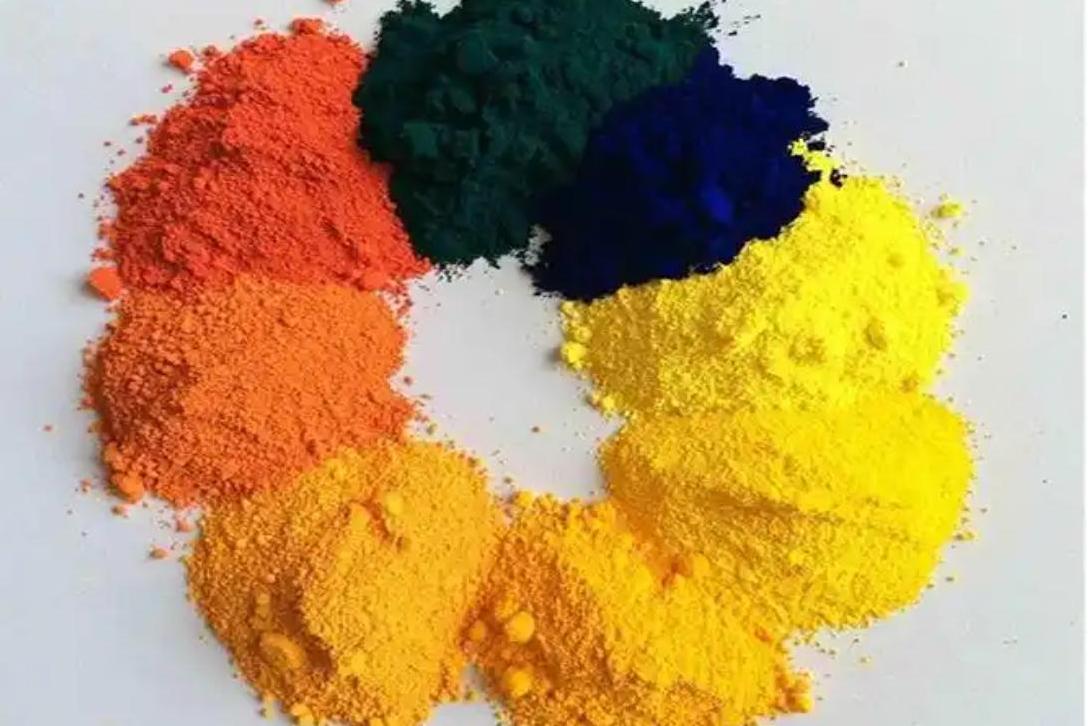
Dyes are classified into: azo dyes, anthraquinone dyes, arylmethane dyes, indigo dyes, sulfur dyes, phthalocyanine dyes, nitro and nitroso dyes, as well as other structural types such as methine and polymetrazine dyes, stilbene dyes, and various heterocyclic dyes.
Dyes are classified into: direct dyes, acid dyes, cationic dyes, reactive dyes, insoluble azo dyes, disperse dyes, vat dyes, sulfur dyes, condensation dyes, and fluorescent whitening agents. Additionally, there are oxidative dyes (such as aniline black) used in textiles, solvent dyes, polypropylene dyes, and food colorings used in food.
Disperse dyes are a class of nonionic dyes with simple structures and extremely low water solubility, existing mainly as a dispersion of tiny particles in the dye bath. The chemical structures of disperse dyes are mainly azo and anthraquinone, but heterocyclic disperse dyes also exist.
Disperse dyes are mainly used for dyeing and printing polyester fibers, and can also be used for dyeing acetate fibers and polyamide fibers. During dyeing, a dispersant must be used to evenly disperse the dye in the dye bath before dyeing various synthetic fibers.
Reactive dyes, also known as reactive dyes, contain active groups in their molecular structure. During dyeing, they covalently bond with the hydroxyl and amino groups in fiber molecules, firmly adhering to the fiber.
Reactive dyes are mainly used for dyeing and printing cellulosic fiber textiles, and can also be used for dyeing wool and nylon fibers. The dye adheres to the fiber through its own affinity, and then, under the action of an alkali agent, bonds firmly to the fiber through covalent bonds.
Acid dyes are a class of water-soluble anionic dyes. The dye molecules contain acidic groups such as sulfonic acid groups and carboxyl groups, usually existing in the form of sodium salts. In an acidic dye bath, they can ionicly bond with the amino groups in protein fiber molecules, hence the name acid dyes.
They are commonly used for dyeing silk, wool, polyamide fibers, and leather. Acid dyes dye fibers through their own affinity and bond with the fibers via ionic bonds. Acid mordant dyes have similar dyeing conditions to acid dyes, but require the action of certain metal salts to form chelates on the fibers to achieve good wash fastness. Some acid mordant dyes contain chelating metal ions in their molecules, exhibiting low hydrolysis tendency and good color fastness.
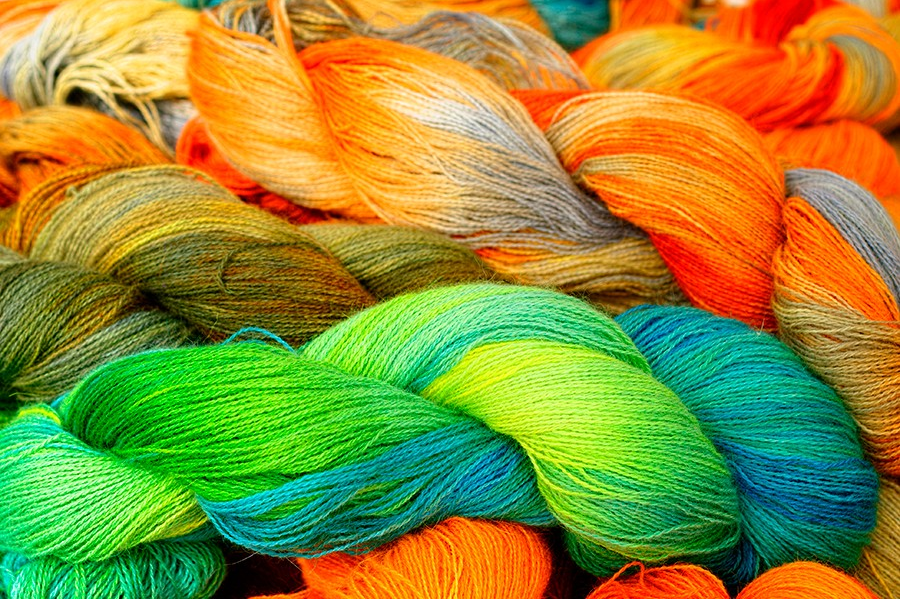
Direct dyes are a class of water-soluble anionic dyes. Most dye molecules contain sulfonic acid groups, while some contain carboxyl groups. The dye molecules are bonded to cellulose molecules by van der Waals forces and hydrogen bonds.
Direct dyes are primarily used for dyeing cellulose fibers, but can also be used for dyeing silk, paper, and leather. During dyeing, the dye is directly applied to the fiber in the dye bath, adsorbed onto the fiber through van der Waals forces and hydrogen bonds.
Cationic dyes are water-soluble and exist in a cationic state. Early dye molecules contained basic groups such as amino groups and often existed in the form of acid salts.
They are mainly used for dyeing polyacrylonitrile fibers. During dyeing, they can combine with the carboxyl anions in protein fiber molecules such as silk through salt bonds.
Most vat dyes belong to the polycyclic aromatic compounds category. Their molecular structure does not contain water-soluble groups such as sulfonic acid groups or carboxylic acid groups. Their fundamental characteristic is the presence of two or more carbonyl groups in their conjugated double bond system. Therefore, under the action of sodium hydrosulfite, the carbonyl groups can be reduced to hydroxyl groups, becoming soluble leuco sodium salts in alkaline aqueous solutions.
Vat dyes are mainly used for dyeing cellulose fibers. During dyeing, they are reduced to water-soluble leuco sodium salts in an alkaline solution containing a reducing agent (such as Na₂S₂O₄, sodium dithionite, commonly known as sodium hydrosulfite), which then dyes the fibers. After oxidation, they revert to insoluble dyes and remain fixed on the fibers.

Sulfur dyes are a class of water-insoluble dyes, generally produced by heating a mixture of aromatic amines or phenolic compounds with sulfur or sodium polysulfides; this process is called sulfidation.
Sulfur dyes are mainly used for dyeing cellulose fibers. During dyeing, they are reduced to a soluble state in an alkaline sulfide solution. After being applied to the fibers, they are oxidized back to an insoluble state and fixed onto the fibers.

Optical brighteners can be considered a type of colorless dye. After being applied to substrates such as fibers and paper, they absorb ultraviolet light and emit blue light, thus counteracting the yellowish tint caused by excessive yellow light reflection on the fabric, producing a visually white and dazzling effect.
Different types of optical brighteners can be used for whitening various fibers. They are applied directly to the fabric and fixed to the fibers through their own affinity or cross-linking agents.

Through the brief introduction of various dyes above, it is evident that different dyes exhibit differences and advantages in structural characteristics and application areas.
Tiankun Chemical focuses on the research and development and production of dyes, possessing over 20 years of experience in dye export, providing stable and reliable dye products and solutions to global customers. For pricing inquiries and free samples, please contact: info@tiankunchemical.com